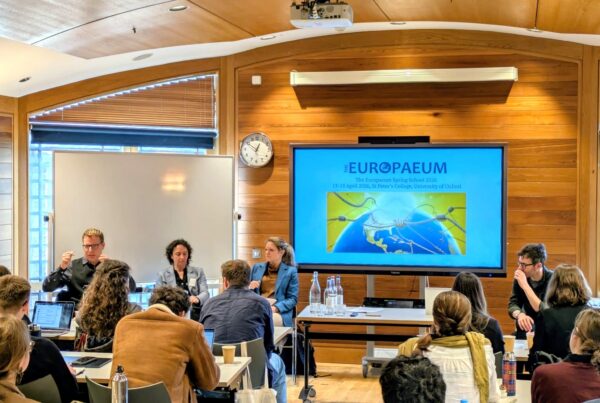
Part of the Lisbon Winter School in Media & Communication Studies: “Media & Dignity”
Catholic University of Portugal | 12 – 15 January 2027
Human dignity is perhaps more at risk today than at any other time in recent memory. Subject to targeted threats like exploitation, misrepresentation and humiliation alongside the more subtle erosion caused by persistent violence, exclusion and inequality, most of us live within entrenched systems that deny us some form of recognition, agency and the right to speak freely or dissent from those in power. Exacerbated by the tumult and uncertainty of war, geopolitical tension, tribalism, exclusionary politics and victimisation, today’s realities force growing numbers of individuals into silence, left unable to cope with loss, invisibility, worthlessness, disregard, displacement and dehumanization. Dignity flounders when suffering is normalised, empathy diminished and the protection of human rights abandoned. Today, even threats to dignity that were long avoided or banned—such as public shaming, brute objectification, ignominy, spectacles of violence and hate speech—are back in our lives with a vengeance.
Dignity prompts more questions than scholars can easily settle. Some see it as an unassailable right—echoing Immanuel Kant’s famous dictum that dignity requires treating individuals as ends, not means—while others maintain its vagueness undercuts its conceptual worth. Larger questions of impact—how dignity’s repudiation can best be stymied, against which institutions and structures dignity needs to be assessed, or with which institutions it can best thrive—remain contested. All the while, threats to human dignity continue to loom large, even as we have not yet figured out how best to identify them, much less wrestle with their resolution.
This Europaeum Media & Communications Workshop in association with the Lisbon Winter School in Media & Communications Studies will bring together master’s and doctoral researchers at Europaeum member universities to explore ideas related to the event’s theme. We invite applications from students in all relevant disciplines who wish to join the discussions or to present a 15-minute paper based on their research. We especially welcome proposals for papers addressing the theme in relation to the following topics:
- Human dignity in war and tragedy
- Covering loss, suffering and displacement
- Media activism and the promotion of human dignity
- Otherness and dignity
- Visibility and invisibility in the media
- Stereotypes and misrepresentations
- Us versus Them narratives
- Symbolic exclusion versus mutual recognition
- Attacks on free speech
- Online harassment, political threats and intimidation
- Digital media and humiliation
- Cyberbullying, trolling, image-based violence and online harassment
- Exclusionary politics and dehumanization
- Denouncing hate speech and aggression against gender, racial and religious minorities
- Algorithms, AI and human dignity
- The eroding of human dignity in specific national or regional contexts
Applications should include the Europaeum application form, a brief CV, a statement of purpose (up to 500 words), and a reference letter from their supervisor or academic advisor. Those who wish to submit a paper should also add a short abstract of the proposed paper (up to 500 words).
The Europaeum covers travel, accommodation and subsistence costs for students selected for this event.
Presenters will be required to submit full papers (max. 20 pages, 1.5 spacing) by 15 December 2026.
For more information about how to apply visit: https://europaeum.org/programmes/events-activities/
Deadline for submission of applications and abstracts: 10 September 2026.
All submissions should be sent to applications@europaeum.org.