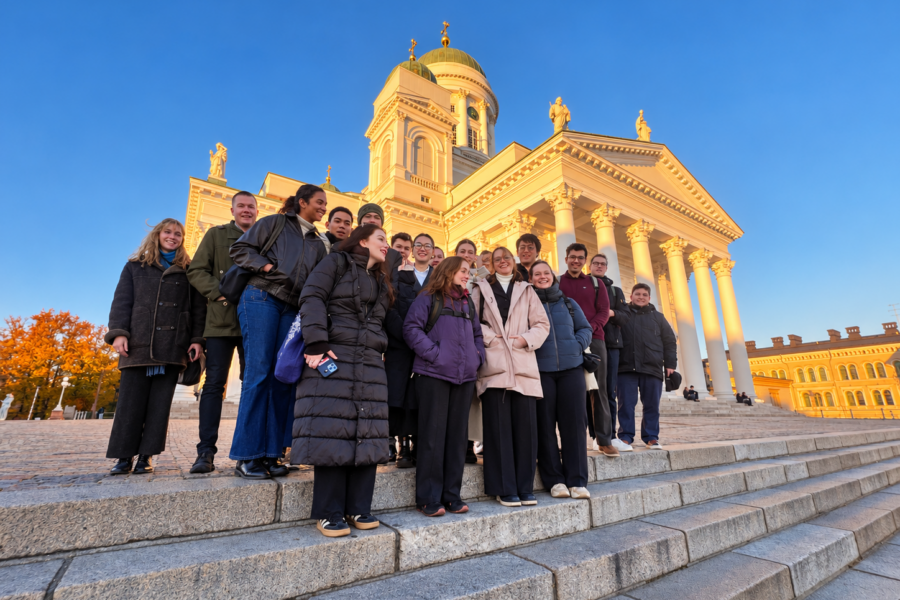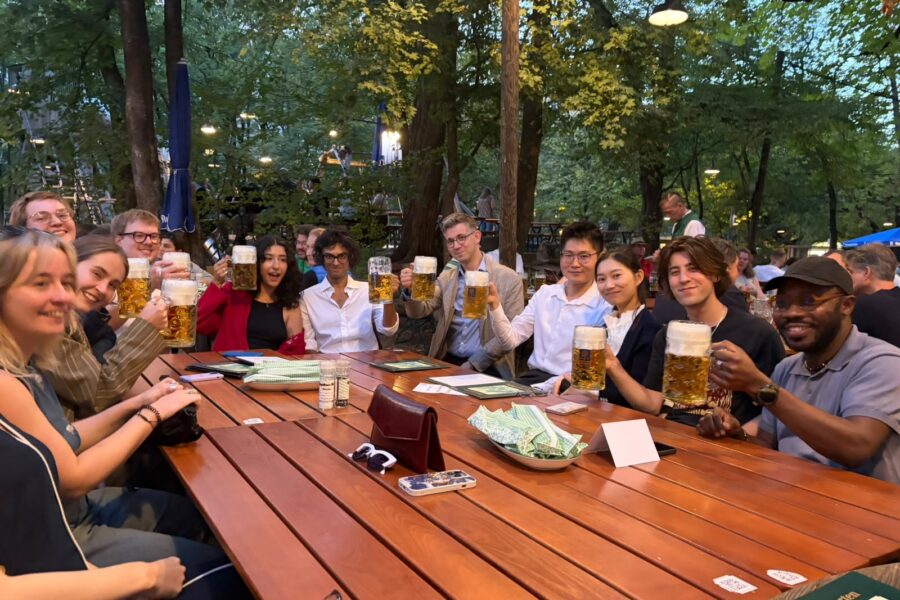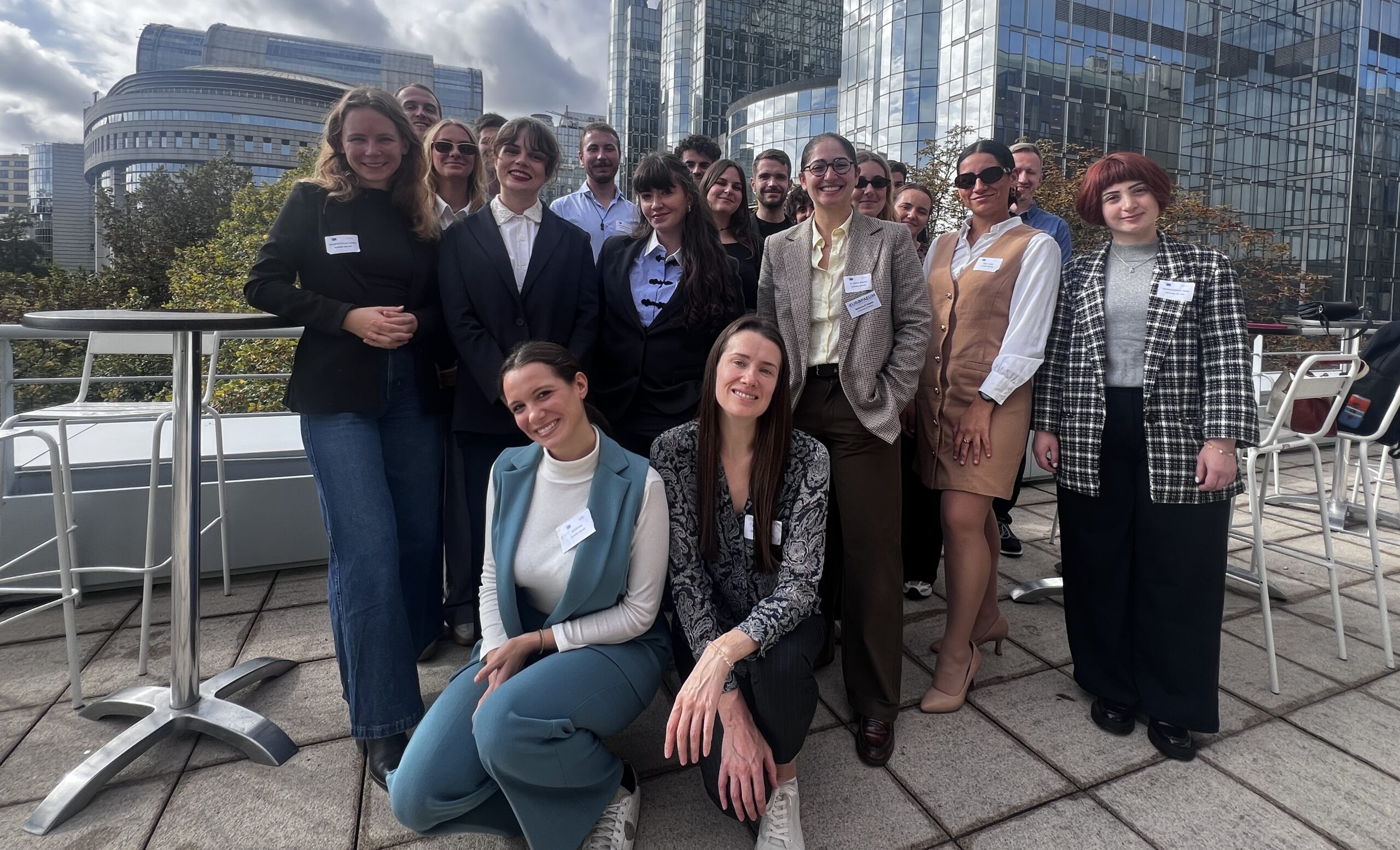
This year’s Brussels Policy Seminar took place from 29 September to the 1 October and focused on the pressures currently facing the European Institutions: democratic, geopolitical, technological, and financial. The first day saw students attend sessions involving officials and policymakers who explained the military threats and pressures on the Union, the question of enlargement, depressurisation strategies, and citizen engagement. After lunch, the student were hosted at the European Parliament where they heard further analyses from members of the Parliamentary Research Service and received a building tour.
The second day saw students visit the European Commission in the Charlemagne Building and the Committee of the Regions. They then went to the Bruegel think tank where Heather Grabbe and colleagues set out the work they do there and its role in generating ideas within the Brussels ecosystem.
On the third day the students visited the European Economic and Social Committee in the morning and benefitted from two further panel discussions in the afternoon. A journalists panel, comprised of journalists from Rapporteur, The Financial Times, and The Guardian, gave outsider perspectives on the challenges MEPs and officials face. A final expert panel then discussed questions of information and disinformation, as well as financial concerns and the enlargement problem.
The students themselves discussed what they had learned over dinner each night in lively conversations.
Student Rasmus Salén (Geneva) writes:
“The Seminar has been a greatly rewarding experience, combining institutional visits guided by Brussels insiders, a variety of engaging expert panels, and a group of highly motivated graduate students participating. A highlight for me was the panel of journalists from leading international papers, whose sharp, critical insights on Europe’s contemporary challenges, such as competitiveness and enlargement, complemented those of policymakers working on these portfolios. I highly recommend applying.”
Student Rebecca El Hawat (Padua) writes:
“Coming from a scientific rather than a policy background, the Brussels Policy Seminar gave me the opportunity to step outside my usual field and look at Europe through a completely different lens. The theme of Europe under geopolitical pressures helped me better understand some of the challenges facing the EU today, but what I valued most was learning how decisions are actually made within the European institutions. The discussions with speakers and participants from very different backgrounds made the experience enriching and gave me a much broader perspective on how research, policy and politics interact.”
Student Ari Bersch (Oxford) writes:
“What made the Europaeum Brussels Seminar special was the expertise of the speakers and the range of perspectives my fellow participants brought to our discussions. As someone who grew up outside Europe with an interest in the transatlantic relationship and European politics and security, I found the seminar an excellent opportunity to learn about these subjects from experts and practitioners. Our panel discussions on European strategic autonomy and Europe’s role in international affairs were particularly enriching, as they showed how the continent and its various political institutions are adapting their approaches to today’s most pressing issues. The lessons I learned will shape how I think about Europe and geopolitics more broadly as I continue in my career.”
The Europaeum expressly thanks all who spoke during the policy seminar for their contributions and for their generosity with their time. It particularly thanks Vasileios Margaras, Heather Grabbe, and Henriette Horvathne Perlenyi for their assistance organising the programme in the European Parliament, Bruegel, and the European Commission respectively.
20 students participated from 12 member universities.