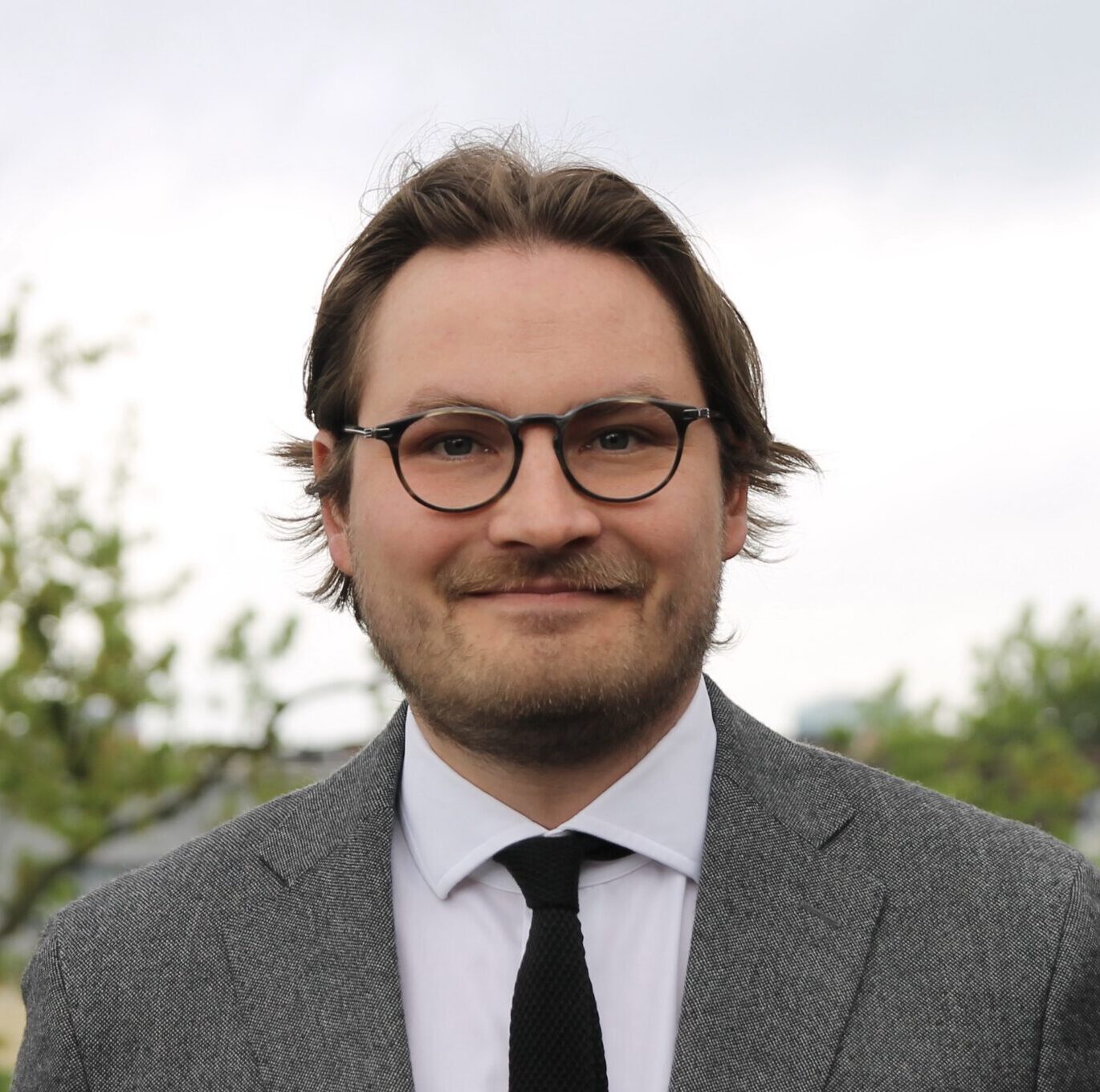
 About the author
Topi Juga is a Europaeum Cohort 4 Scholar and a Doctoral Researcher in Political History at the University of Helsinki. He is currently working as a Research Fellow at the Finnish Institute of International Affairs (FIIA).
Topi talks about his current role and reflects on how his experience of participating in the Scholars’ programme is helping him in his work at the moment.
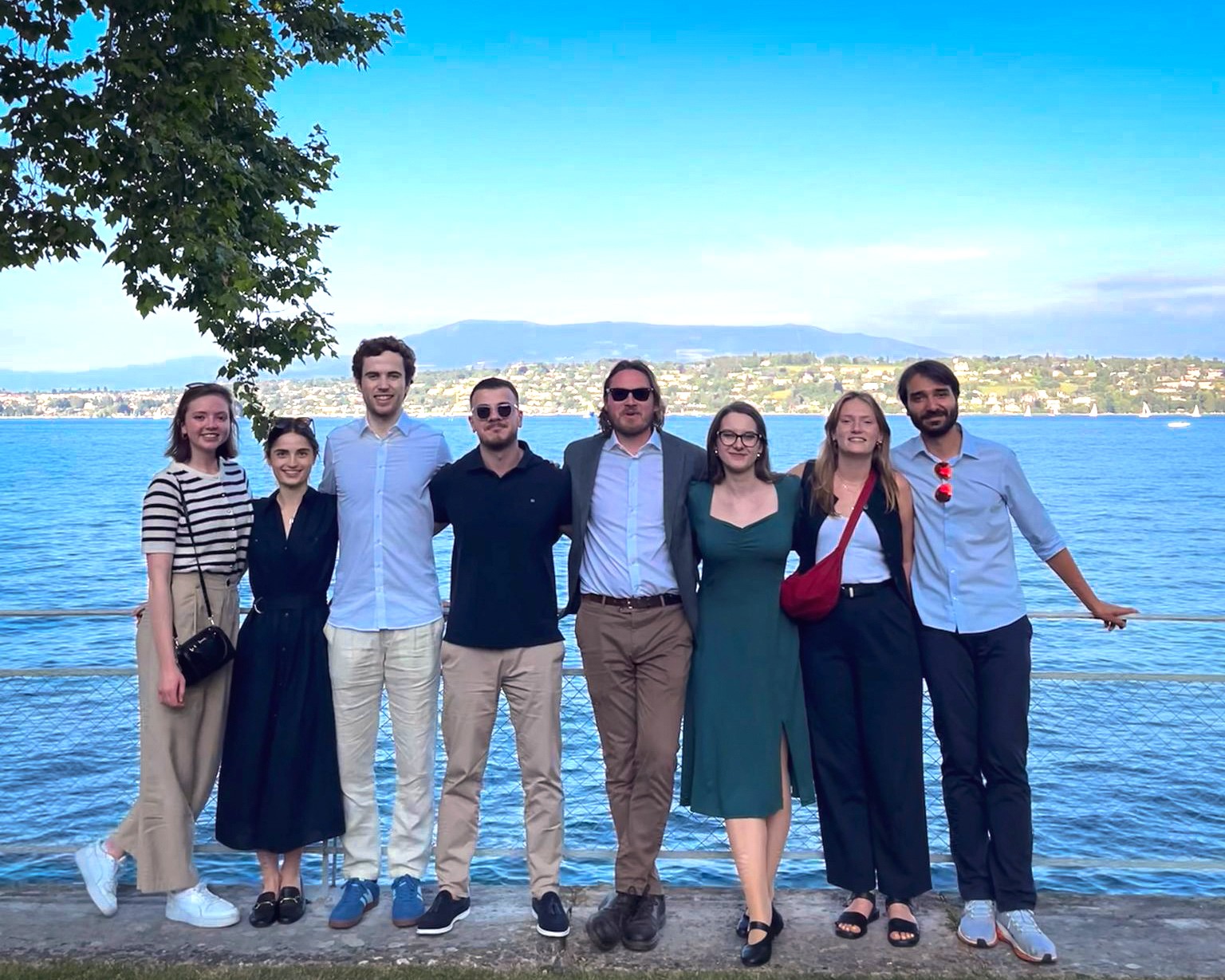
Group photo above: The Media Wallet team in a Scholars’ Programme module by Lake Geneva. Topi pictured fourth from the right.
Reflections on Europaeum Scholars’ Programme participation and current role
War has returned to the European continent, as Russia’s unjustified war of aggression enters its fifth year. While it has strengthened unity among EU Member States, it has also exposed key vulnerabilities at both national and European levels. Many countries have neglected investments in defence industries, and societal preparedness for severe crises remains uncertain. In this context, Heads of State are meeting at an informal EUCO in Cyprus to discuss how the EU should act and what support it should provide if a Member State faces an attack.
These are the themes I am currently working on at the Finnish Institute of International Affairs. I had the opportunity to start as a Research Fellow at FIIA only a few months after completing the Europaeum Scholars’ Programme in fall 2025. I am part of a research project analysing how Finland should organise its national economy in the face of severe crises and disruptions. A key part of the work is understanding what measures could be implemented at the EU level in a worst-case scenario.
The transition into FIIA has reminded me in many ways of my time in the Scholars’ Programme. I am once again working in a multidisciplinary group on a topic that is relatively new – not only to me, but to the wider research community. Most existing research on how countries mobilise resources for war efforts focuses on the Second World War, yet today’s economic structures, value chains, and alliances (including the EU) are fundamentally different. Our project combines approaches from political and economic history, international relations and EU studies, geoeconomics, and economics to better understand this phenomenon in a modern context.
I am glad to have had the experience of conducting a Policy Project in Europaeum in a very similar setting. My group examined what kind of policy action could be proposed in the modern information environment, where disinformation spreads fast and fewer people rely on quality news. It was a complex issue, closely tied to the fundamentals of democracy, and full of difficult questions rather than easy answers. The environment was very similar to the one I now work in at FIIA. The Scholars’ Programme showed me the value that a political historian working on Finland’s EU policy can bring to such a setting, and how fruitful interdisciplinary collaboration can be. I am certain this experience has helped me get a strong start at FIIA, one that I hope will lead to successful results.