The Europaeum Debate
“This House believes that States should focus more on global interdependence and cooperation than on formal sovereignty, national interests and border protection.”
3 June 2026 | Palácio Estoril, Estoril, Portugal
This year’s Europaeum Debate at the 34th Estoril Political Forum, organised by the Institute for Political Studies at the Catholic University of Portugal, built on the event’s overarching theme of independence in an interdependent world: “This House believes that States should focus more on global interdependence and cooperation than on formal sovereignty, national interests and border protection.”
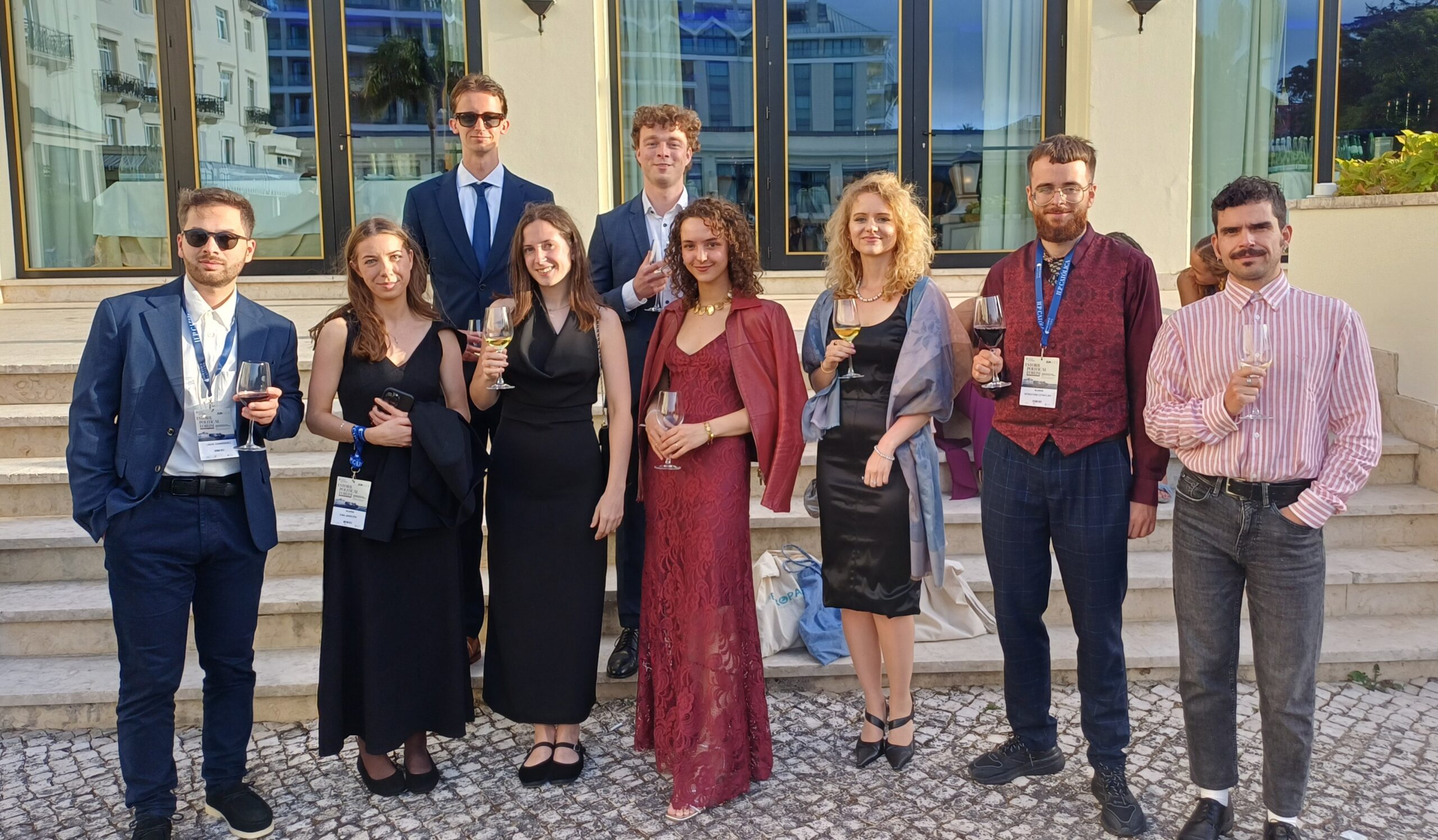
Two students from the Universidade Católica met with five from the Jagiellonian University and four from the wider Europaeum network (Leiden, LMU Munich and FU Berlin) to participate in debate preparation. Students discussed how to develop arguments for and against the motion and practiced the rhetorical strategies of debating in the Oxford style.
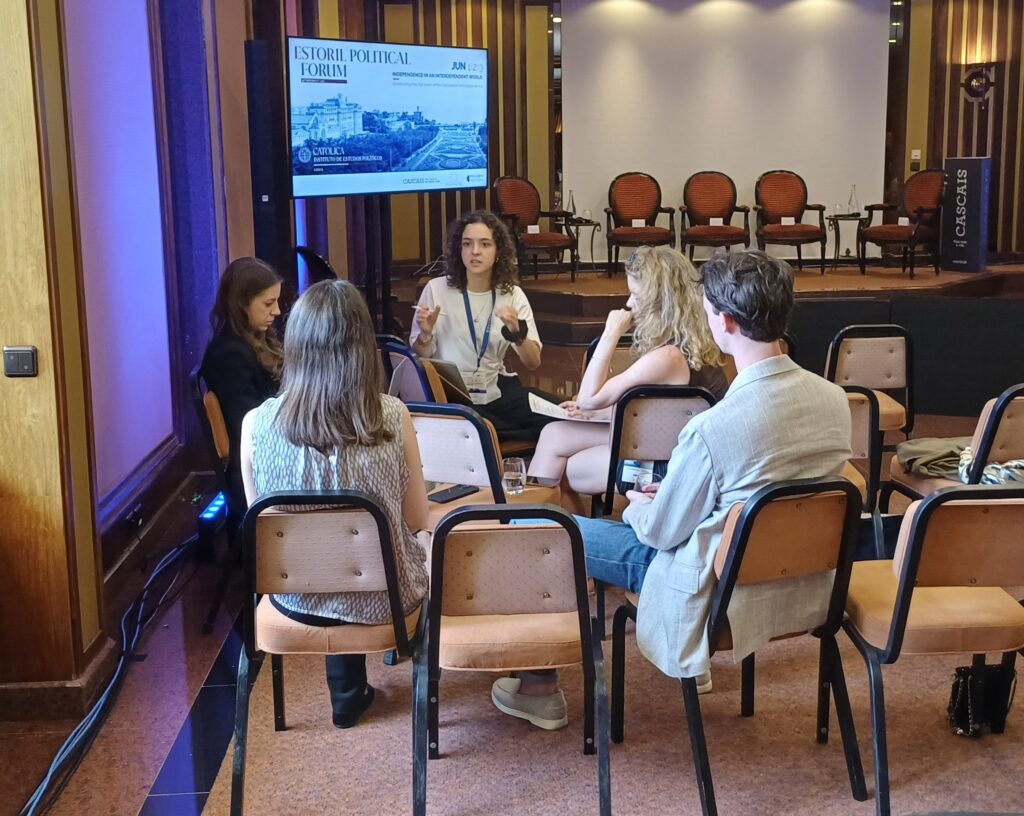
Six students took part in the debate itself. Speaking for the motion were Ewa Janaczek, Zuzanna Wilczynska and Ania Maby from Jagiellonian University. Against were Felix Heuner (Leiden), Sophia Sousa (UCP) and Lucas Quaresma (UCP). They were supported in debate preparation by Bram Boers and Ortensia Cicigoi (LMU Munich), Francisco Torres Jimeno (Freie Universität Berlin) and Lasha Svanishvili (Jagiellonian) who also assisted with counting the votes.
You can read below Felix’s, Bram’s and Francisco’s contributions for the debate.
An initial tally of opinions showed slight overall support for the motion among the audience, but after a series of lively and well-informed arguments a further vote was taken and the prevailing attitude in the audience shifted against the motion with a majority now voting against.
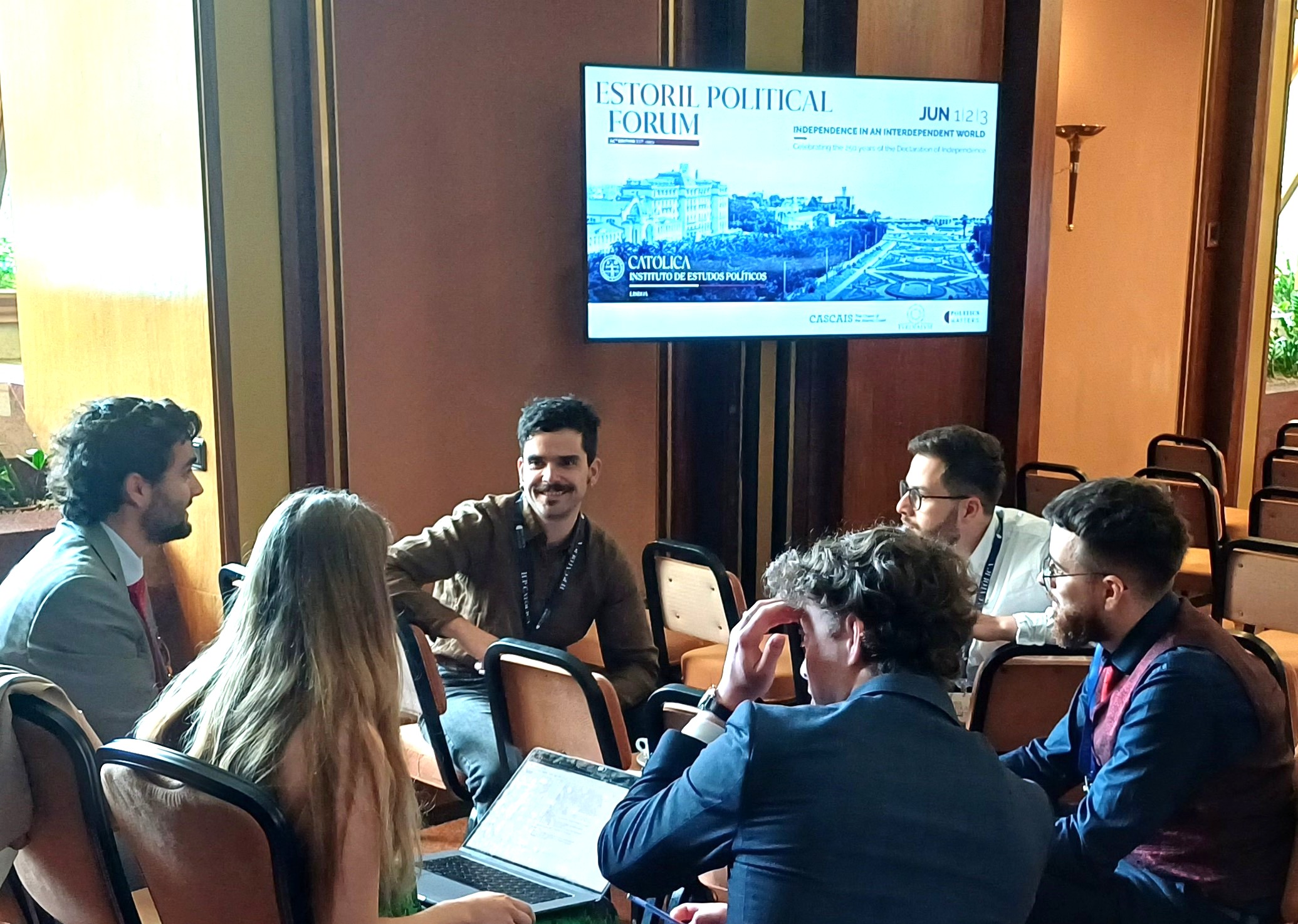 Francisco José Torres Jimeno, Master’s student in Political Science, Freie Universitat Berlin presents his position in the debate below.
This House would prioritise global cooperation over national independence.
Global cooperation should be prioritised over national independence, as the most pressing challenges of the 21st century, such as climate change and health crises, require coordinated international action. Cooperation not only helps confront challenges but also strengthens other social dimensions: educational exchange, shared research, and academic mobility reinforce collective knowledge and foster more innovative and open societies.
Second, international cooperation can strengthen democratic oversight. When power is distributed across different levels, the chances that a single government captures institutions are reduced. Cooperative frameworks establish common standards for the rule of law and fundamental rights that act as barriers against democratic backsliding. If a country experiences the rise of anti-democratic forces, shared institutions and international commitments act as counterweights that make it harder to dismantle democratic safeguards.
Third, prioritising cooperation contributes to a more balanced international economy. Multilateral mechanisms offer a unique form of protection for small and medium-sized countries, since cooperation reduces tariff wars, limits arbitrary protectionism, and encourages stable agreements. Examples based on regionalist policies, such as the recent agreement between Mercosur and the European Union, show how shared rules can create more predictable markets. Regional and transnational cooperation, both as a means and as an end, is grounded in values that this side considers fundamental to social development: respect, mutual recognition, dialogue, freedom, and equal opportunities.
Admittedly, critics argue that very deep cooperation can sometimes harm democracy when intergovernmentalism allows executives to make decisions while bypassing parliament. However, this risk does not stem from cooperation itself, but from how international institutions are designed and how integration processes are deepened. With proper mechanisms of transparency and democratic participation, international cooperation does not weaken democracy: rather, it can strengthen it.
 Bram Boers, a Master’s student in Political Science, LMU Munich outlines his position in the debate below.
This House should not prioritize global cooperation over national independence.
Both ideas can be valuable, but neither should become a goal that justifies all means, or a slogan under which any reform can be muddled through.
In the different areas that the EU, but also the wider world, are dealing with today, it is important to remain critical of concepts that seem to legitimize far‑reaching political and economic reforms, even when the technically optimal strategies point to less cooperation or more differentiation. The eurozone crisis is a clear example: the drive for monetary integration outpaced serious reflection on whether highly different economies could share one currency without a common fiscal capacity. The result was not just a temporary shock, but a persistent divide between creditor and debtor states and an increasing gap between the north and south in Europe. A larger warning for the risks of integration pursued as an end in itself hardly exists.
While deeper integration and thus a “stronger Europe” is now often posed, possibly rightfully so, as the answer to the return of realist power politics, this should never lead to hasty and irreversible commitments to a union that is, in key policy fields, economically incompatible. I am not vouching for the return of zero‑sum geopolitics or for a suspicious attitude towards states that jointly aim to protect democratic values. However, national independence is crucial to keep the instruments in the hands of those who are familiar with a country’s specific structures, social contracts and vulnerabilities, in order to preserve them.
Only by protecting national independence, and with that the responsibility and capability to manage and rule one’s own economy in a justified way, can fruitful collaboration emerge. If you cannot take care of yourself, you cannot take care of others.
Felix Heuner, an M.Sc. Crisis and Security Management student, Leiden University
Why interdependence cannot protect us from great powers
Position prepared for a formal debate. The author was assigned to argue against the motion that states should focus on interdependence and cooperation instead of formal sovereignty.
I argue against the motion that states should focus on interdependence and cooperation instead of formal sovereignty. The post-Cold War order made Europeans rich and kept them safe, and it did so through cooperation and integration. That order rested on conditions that no longer hold. Russia’s war on Ukraine, a more assertive China, and an aggressive United States foreign policy show that this holiday from history is over.
The case for interdependence assumes that we can shape it to our benefit. Terms such as mutual or managed interdependence are invented to create a feeling of control. A more honest description of today’s world is weaponised interdependence, because dependence is rarely mutual and rarely managed. It is heavily asymmetric and skewed towards a few great powers, and those powers use it to force their will on middle and smaller states. The recent tariff negotiations between the United States and Europe ended in a lopsided agreement, not because Washington negotiated well, but because it weaponised European dependence on its security guarantees. Even when we deliberately build countervailing assets, interdependence follows economies of scale that we cannot match against China or the United States.
Interdependence also can not serve as a protection from armed conflict. Observers noted before 1914 that Britain and Germany can not go to war with each other, because they are too economically intertwined. Similar arguments were made before Russia invaded Ukraine. Both predictions failed.
I am not arguing for isolation, which is neither possible nor desirable. My argument is that for democracies, middle powers, and smaller states to make independent decisions that follow the will of their people, they must refocus on sovereignty. To pretend that interdependence will protect us is an illusion that disregards the structural asymmetries beneath it.
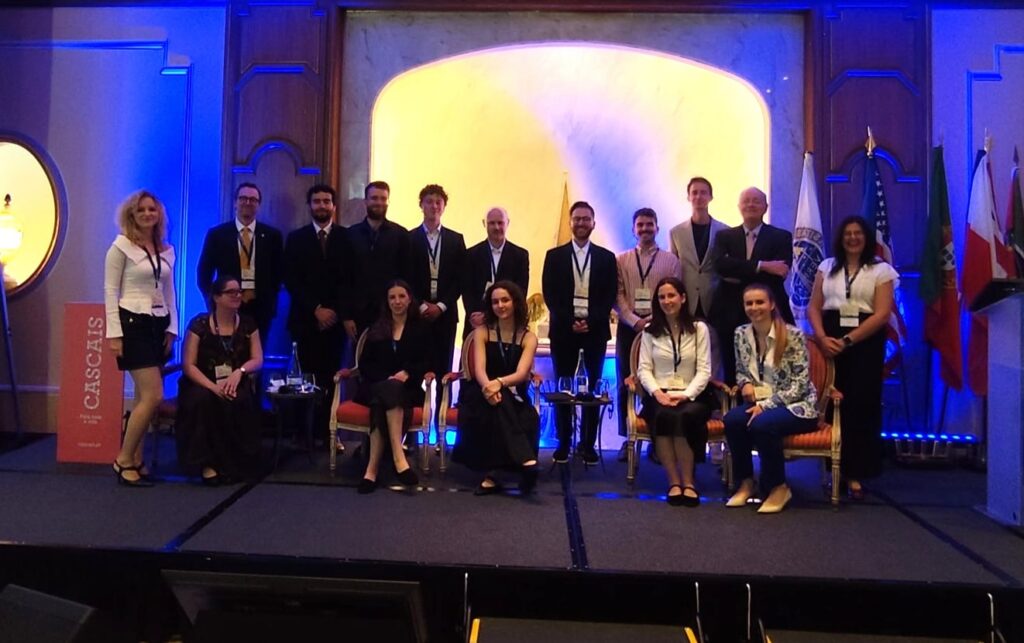 The Europaeum thanks the four scholars who provided expert commentary on the students’ arguments, Dr Łucja Piekarska (Jagiellonian University); Professor Ernest Caldwell (St. Mary’s University, London), Professor Sónia Ribeiro (IEP-Católica, Lisbon) and Professor Paulo Sande (IEP-Católica, Lisbon). The discussants highlighted the need to keep such debates rooted in the realities of international politics while also leaving space for dialogue based on shared values and the possibility of reaching consensus.
The Europaeum also thanks Prof. Mónica Dias, the Director of the Institute for Political Studies and the rest of the organising team; and Prof. Isabel Capeloa Gil, the Rector of the UCP.