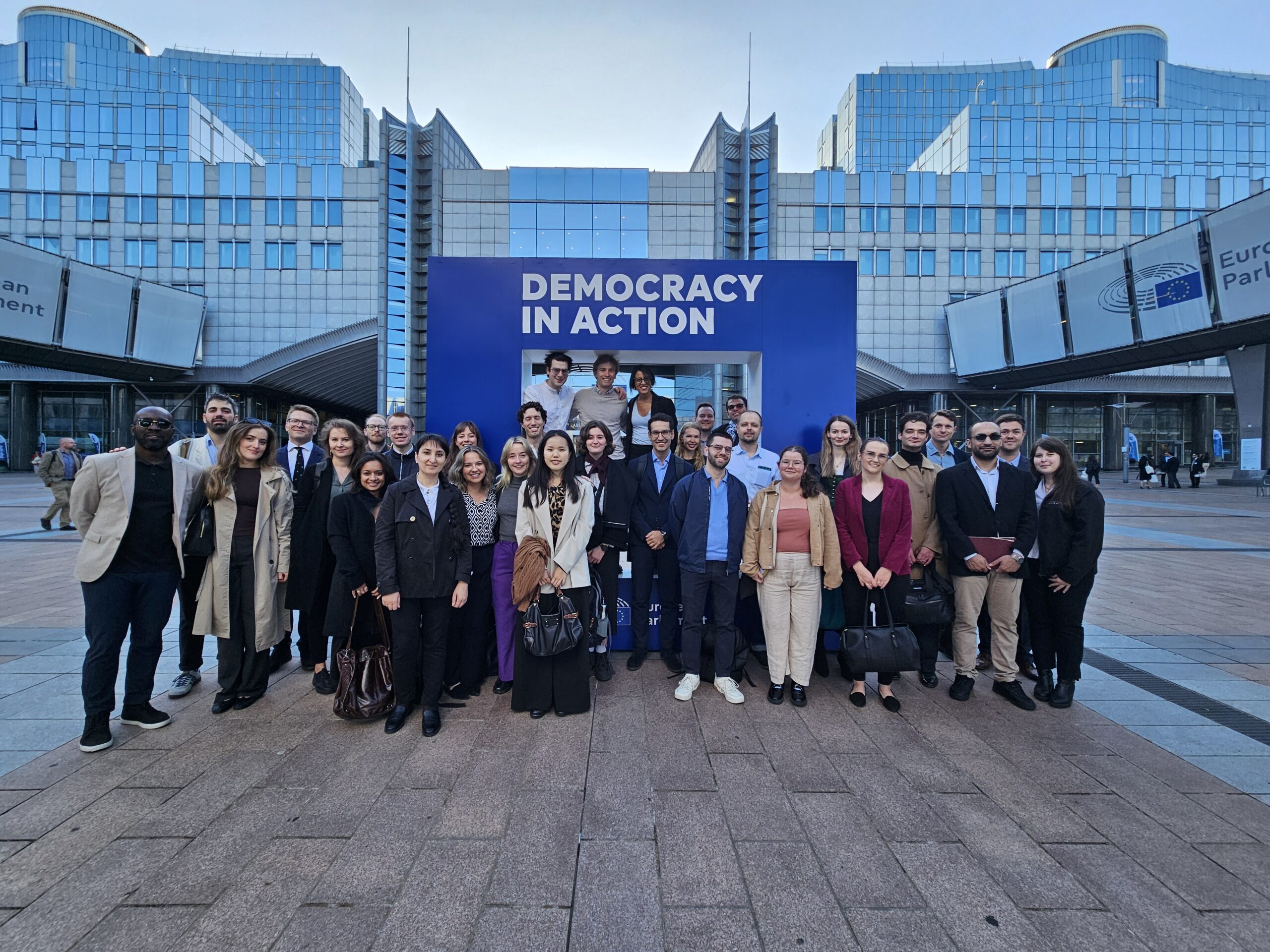
For their second module our future leaders headed to Brussels to experience the ‘Brussels bubble’ and learn more about how policy is made at the heart of the EU. We focused on our three highlight areas – climate crisis, democratic resilience, and new technologies – throughout the week as we engaged with a wide range of policy makers.
We started the week with a visit to the European Commission, where we heard about EU policy on AI, as well as the use of the Investment Fund to tackle carbon emissions. Continuing our exploration of climate crisis, we visited the Institute for European Environmental Policy in the afternoon, learning about the scope of their work in biodiversity and climate risk governance, with a highly interactive session underlining how different climate risks interact.
On our second day we heard about the priorities of the European External Action Service (EEAS) and their work on climate diplomacy during a visit to their headquarters in the morning. In the afternoon we continued to discuss Europe’s place in the world, with individual talks on the EU’s work on international development cooperation and Shada Islam advocating for the EU to live up to its stated core values at home and abroad.
Capping a busy day, Herman Van Rompuy’s keynote lecture offered a recent historical perspective on current challenges facing Europe and constructive thoughts on effective paths forward. We enjoyed meeting several of our alumni, who joined us for the lecture and drinks afterwards.
On Wednesday, following a tour of the European Parliament building, the European Parliamentary Research Service (EPRS) hosted us for a visit. Their experts discussed where AI policy may go next, how the Democracy Shield can help make democracy in the EU more resilient, and proposals for European electoral reform. In the afternoon we were hosted by the Wilfried Martens Centre for European Studies, where we learned about the role of political foundations in the EU policy system and the Centre’s work on security and defence.
To learn more about European social policy we next visited the European Social Observatory. There we discussed the research centre’s work on health, green transition, and digital and heard more about how policy-focussed research centres are structured and funded.
A visit to the European Partnership for Democracy offered important further perspectives on the state of democracy in Europe, via insights into several aspects of the work they do and a deeper dive into their projects aimed at increasing youth engagement.
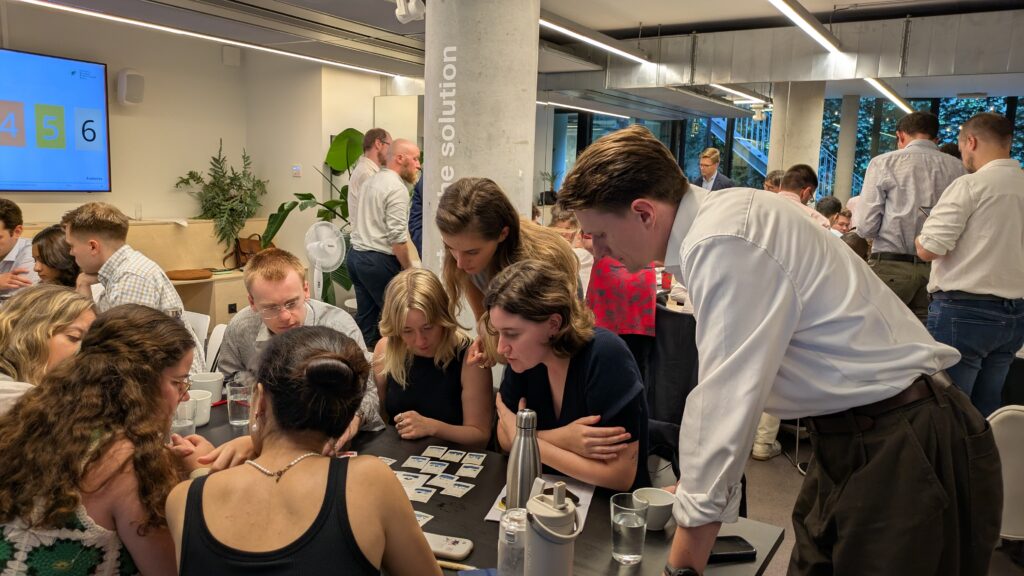
Our last full day in Brussels turned to thinking more practically about how to do policy. We are grateful to CEPS experts for a link-up which explored both how policy research differs from academic research and gave the group the opportunity to think through policy issues in relation to cognitive AI, green transition, and democratic deficit. We followed this with a training session on policy analysis techniques and policy narratives. Capping a successful week, Giuseppe Abbamonte from the European Commission outlined the EU’s media policy and how current and planned initiatives aim to both bolster European media companies and promote media freedom and pluralism.
After a full week, we ended the module with a morning of reflection upon the various policy areas the group had encountered across the week and a bit of brainstorming about what individuals might want to propose as policy topics – something that they will do in advance of our next module in Budapest in December.
We are very grateful to all of the organisations who hosted us during the week and to all of the individuals who participated in panels, gave talks, or facilitated training and/or interactive activities during the week.